Jiu Ju Magnetizer

Smart Automation: Paving the Way to Success
Pioneering Industrial Advancement with Intelligent Solutions
Full Site Search
Pioneering Industrial Advancement with Intelligent Solutions
The "Frequently Asked Questions" section for Jiuju magnetizing machines compiles the most common questions raised by customers during the purchasing and usage process. The content covers a wide range of practical topics—including equipment selection, compatible materials, operating environments, operating procedures, daily maintenance, troubleshooting, and customization options—presented in a clear and easy-to-understand manner. It provides comprehensive answers to questions regarding different operational requirements, magnetization process combinations, and equipment application scenarios, helping customers quickly clarify their purchasing decisions and avoid common pitfalls. At the same time, we continuously update the section with industry-specific expertise and practical experience to resolve various basic challenges encountered in daily production. This one-stop resource answers all types of questions, saving customers the time spent on repeated inquiries and helping them easily select the right equipment, use it properly, and efficiently advance their magnetic material magnetization production operations.

The requirements for magnetization accuracy in new energy vehicle drive motors are 3 to 5 times higher than those for traditional industrial motors. This paper analyzes the necessity of high-precision magnetization from three perspectives—motor efficiency, NVH control, and thermal management reliability—and discusses the design approach for achieving ±1% flux consistency.
View Full Version
The stable operation of magnetization equipment directly affects production line yield. This article lists five key maintenance steps — capacitor bank inspection, magnetization coil cleaning, cooling system inspection, terminal tightening, and periodic calibration — to help operators establish a standardized daily maintenance routine.
View Full Version
The quality of the magnetization of neodymium-iron-boron permanent magnets depends on three key parameters: magnetization temperature, magnetization voltage, and magnetization time. This article analyzes the specific impact of each parameter on the magnetization results and provides recommended parameter ranges for different grades of neodymium-iron-boron, to help process engineers optimize
View Full Version
Pulse magnetization and direct current (DC) magnetization are two magnetization technologies based on fundamentally different underlying principles. This paper conducts a quantitative comparison across five dimensions—magnetization intensity, suitable magnetic materials, magnetization speed, energy efficiency, and equipment cost—and provides recommendations for selecting the appropriate technology in magnetic material production scenarios.
View Full Version
Magnetizers are high-voltage pulse-type precision devices, and the quality of their daily maintenance directly determines their magnetization accuracy, operational stability, and service life. Improper operation and maintenance can easily lead to issues such as capacitance decay, misalignment of fixtures, and deteriorated insulation performance, thereby increasing the risk of production failures and downtime.
View Full Version
Axial flux motors mostly use thin magnet steel arranged in densely alternating N/S poles, with the magnetic circuit running axially. Magnetization quality directly determines the motor's torque density, smooth operation and overall efficiency, so magnetization equipment cannot simply adopt traditional radial-motor solutions...
View Full Version
When selecting a magnetizing machine, material compatibility is a key evaluation criterion. Different magnetic materials vary significantly in coercivity and magnetization characteristics. If the equipment is not compatible with the material, the consequences range from incomplete magnetization and substandard magnetic performance in mild cases to magnet fracture and performance degradation in severe cases, leading directly to
View Full Version
Magnetizers are high-voltage pulse-type precision devices, and the quality of their daily maintenance directly determines their magnetization accuracy, operational stability, and service life. Improper operation and maintenance can easily lead to issues such as capacitance decay, misalignment of fixtures, and deteriorated insulation performance, thereby increasing the risk of production failures and downtime.
View Full Version
The Jiuju Magnetizing Machine utilizes the principle of capacitor-stored energy pulse discharge to instantly release a strong magnetic field and complete magnetization and shaping. The equipment supports voltage adjustment from 0 to 2,000 V to accommodate the characteristics of different magnetic materials. It can magnetize a single part in as little as 1–2 seconds, with a yield rate of 99.51% or higher for TP3T and above.
View Full Version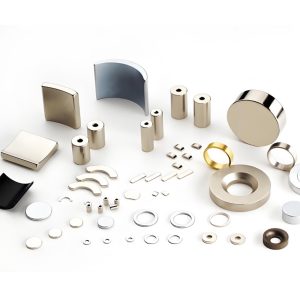
The Jiuju Magnetizing Machine utilizes the principle of capacitor-stored energy pulse discharge to instantly release a strong magnetic field and complete magnetization and shaping. The equipment supports voltage adjustment from 0 to 2,000 V to accommodate the characteristics of different magnetic materials. It can magnetize a single part in as little as 1–2 seconds, with a yield rate of 99.51% or higher for TP3T and above.
View Full Version Chinese Chinese
 English
 Russian
 Vietnamese
 Korean
 Thai
 French
 Spanish
 Japanese
 Hindi
 Bengali
 Portuguese