 Jiu Ju Magnetizer

JIUJU"s Magnet Industry News] India's new policy focuses on supporting the sintered rare earth permanent magnet (REPM) manufacturing industry.
End-to-End Solution for Magnetization Automation
Automated Magnetic Charging Integrated Solution
On November 26, 2025, the Indian government officially approved the Program for Promotion of Sintered Rare Earth Permanent Magnet (REPM) Manufacturing. This is the first time that the country has introduced a national-level special program covering the entire chain of local REPM production, with the core aim of reducing dependence on overseas supply chains such as China, building an autonomous and controllable REPM industrial system, providing core material support for downstream strategic industries such as electric vehicles, renewable energy, robotics, and accelerating the implementation of the Atmanirbhar Bharat (“Self-Reliance India”) strategy. "(Atmanirbhar Bharat) strategy.
制造业.jpg)
I. Development context and core objectives
Currently India's REPM import dependence is at an extremely high level, with imports reaching 53,700 tons in fiscal year 2025 (April 2024-March 2025), doubling the growth from the previous fiscal year. From the perspective of the global industry pattern, China dominates the global 90% REPM production capacity, superimposed on the supply chain volatility risk brought about by the intensification of geopolitical conflicts, further promoting India to accelerate the localization of REPM layout. At the demand side level, with the continued expansion of the electric vehicle market, renewable energy projects are steadily advancing, coupled with climbing demand for defense equipment, consumer electronics and other fields, it is expected that by 2030, India's REPM market demand will double compared to 2025.
The core objective of this program is to build an integrated REPM production system with an annual capacity of 6,000 tons, to achieve an independent supply of the entire value chain from rare earth oxides to finished sintered magnets, and ultimately to promote India's position as a core participant in the global REPM market.
II. Scale of funding and incentive system
With a total capital investment of Rs. 7.28 billion (approximately $815 million), the program is the single largest incentive investment in the REPM sector in India. The fund allocation framework is clear: Rs. 6.45 billion (about $722 million) for a five-year sales linkage incentive, based on the actual sales performance of the enterprise in order to fully stimulate the market-based production vitality; Rs. 750 million (about $84 million) for capital subsidies, focusing on support for the enterprise to carry out the construction of factories and the procurement of production equipment; the remaining funds will be used for the project administration and the whole process of supervision. The remaining funds will be used for project administration and overall supervision. The remaining funds will be used for project administration and supervision of the entire process. The incentive mechanism adopts the innovative model of “Category 1”, which ensures the efficiency of the use of funds and the effectiveness of inputs and outputs through the dual design of capital support and performance linkage.
III. Implementation mechanisms and timeline
The total capacity of 6,000 tons/year will be allocated to five selected enterprises through global competitive bidding, with a maximum capacity quota of 1,200 tons/year for a single enterprise. The bidding evaluation will focus on the enterprises' technology R&D capability, supply chain integration strength and localization production commitment. The implementation cycle of the program will last for 7 years (calculated from the date of winning the bid), of which the first 2 years will be the construction period, during which the site planning of the integrated manufacturing facilities, equipment installation and commissioning, and trial production will be completed; and the second 5 years will be the incentive period, during which the subsidy funds will be realized on the basis of the actual sales volume of the enterprises. Selected companies are required to commit to practicing the full value chain production model, and shallow participation such as assembly is strictly prohibited. The Department of Heavy Industry and Public Enterprises (DHI) will undertake the program.
The implementation of supervision and management responsibilities, on the one hand, to ensure that the production and operation of enterprises in line with environmental compliance requirements, on the other hand, to promote the development of the industry to drive thousands of jobs added.
制造业1.jpg)
In terms of positive impact, it is expected that by 2030, India's local rare earth permanent magnet (REPM) production capacity is expected to meet the domestic market demand of 20% to 30%, which will help India to save tens of billions of dollars in related import funds. At the same time, the construction of this capacity will also effectively stimulate the synergistic development of the upstream and downstream industrial chain of rare earth mining and refining. At the strategic level, this initiative will strengthen India's competitive advantage in the process of global clean energy transformation, provide strong support for the promotion of the “Make in India” strategy, and then attract Japan, Australia and other countries to carry out cooperation and investment in the field of rare earths. On the industrial application side, rare earth permanent magnets, as the core key components of electric vehicle motors and wind turbines, will provide a guarantee for the development of India's electric vehicle industry by increasing its local production capacity, and help the country's electric vehicle production grow from 2 million units in 2025 to 10 million units in 2030.
However, the program to promote the process of challenges should not be underestimated: First, high technical barriers. Rare earth permanent magnet production covers high-precision metallurgical technology and environmentally friendly production process, India's local enterprises need to quickly improve the relevant technology research and development and application capabilities; Second, there is a shortfall in the supply of raw materials. Although India's rare earth reserves ranked fifth in the world, but limited by backward mining and separation technology, the supply of relevant raw materials is difficult to match the demand for production capacity, the need to synchronize the increase in investment in this area; Third, facing fierce competition in the global market. At present, China has a significant price advantage in rare earth permanent magnet production capacity, India needs to improve product quality, the implementation of low-carbon production mode, etc., to achieve differentiated competition in order to break through.
The implementation of the program is a key point in India's transition from a rare earth permanent magnet importer to a manufacturing hub. Specific details of the subsequent tenders will be gradually announced to the public, and the first batch of production facilities is expected to be put into operation in 2027. If the program can be successfully promoted and put into effect, it will significantly enhance India's international voice in the global rare earth permanent magnet industry.
Magnetization of Magnetic Materials
3C Electronic Magnetization
Motor Rotor Magnetization
Car Speaker Magnetization
New Energy Vehicle Industry
Medical Equipment Industry

Video Case Study on the Magnetization Process for Jiuju Irregular-Shaped Cobalt Magnets—Jiuju Magnetizer
September 12, 2026
Irregularly shaped samarium-cobalt magnets have complex magnetic pole configurations. Combined with the high-temperature resistance and high coercive force of samarium-cobalt materials, this makes them highly prone to issues such as magnetic field non-uniformity and uneven magnetization during magnetization, placing high demands on tooling and process parameters.
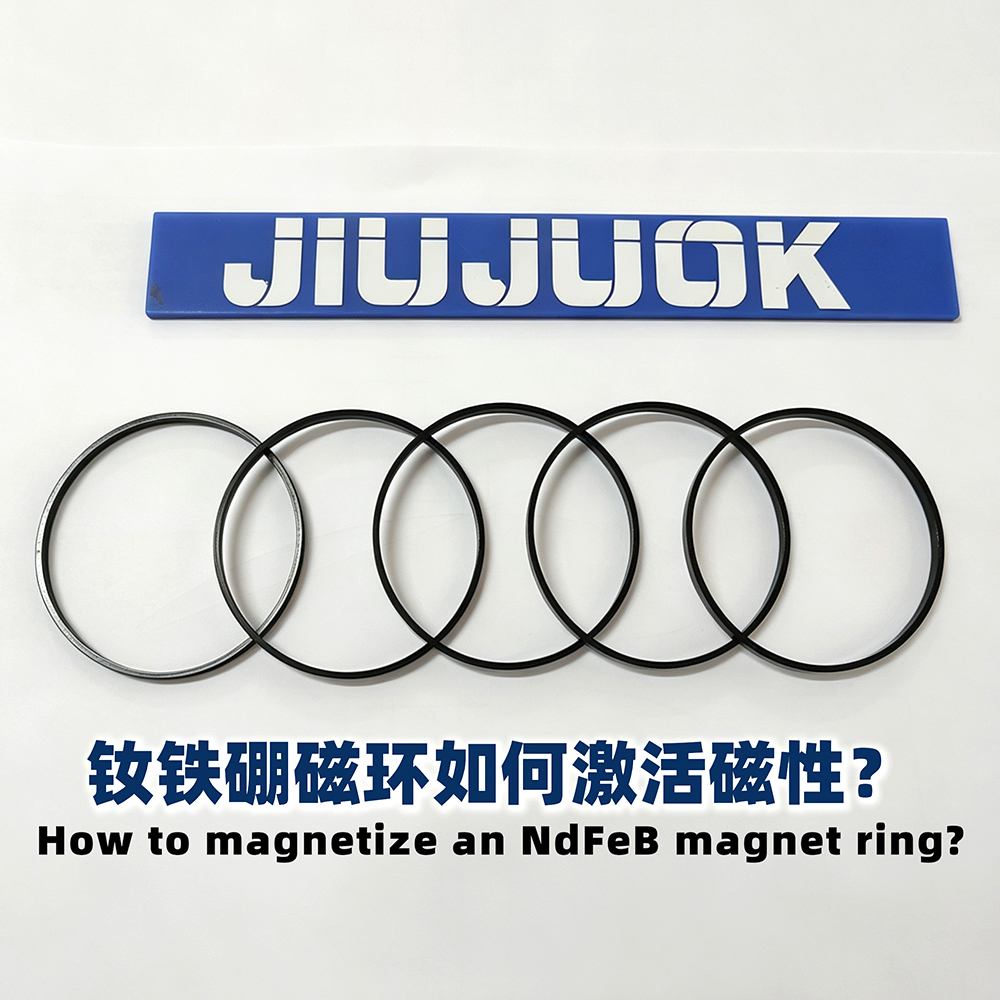
Video Case Study on the Magnetization Process for Sintered Neodymium-Iron-Boron Magnetic Rings—Jiuju Magnetizer
September 11, 2026
Sintered neodymium-iron-boron magnetic rings are widely used in precision equipment such as motors and sensors; multipole magnetization imposes stringent requirements on magnetic field uniformity and the positioning accuracy of the magnetic poles.
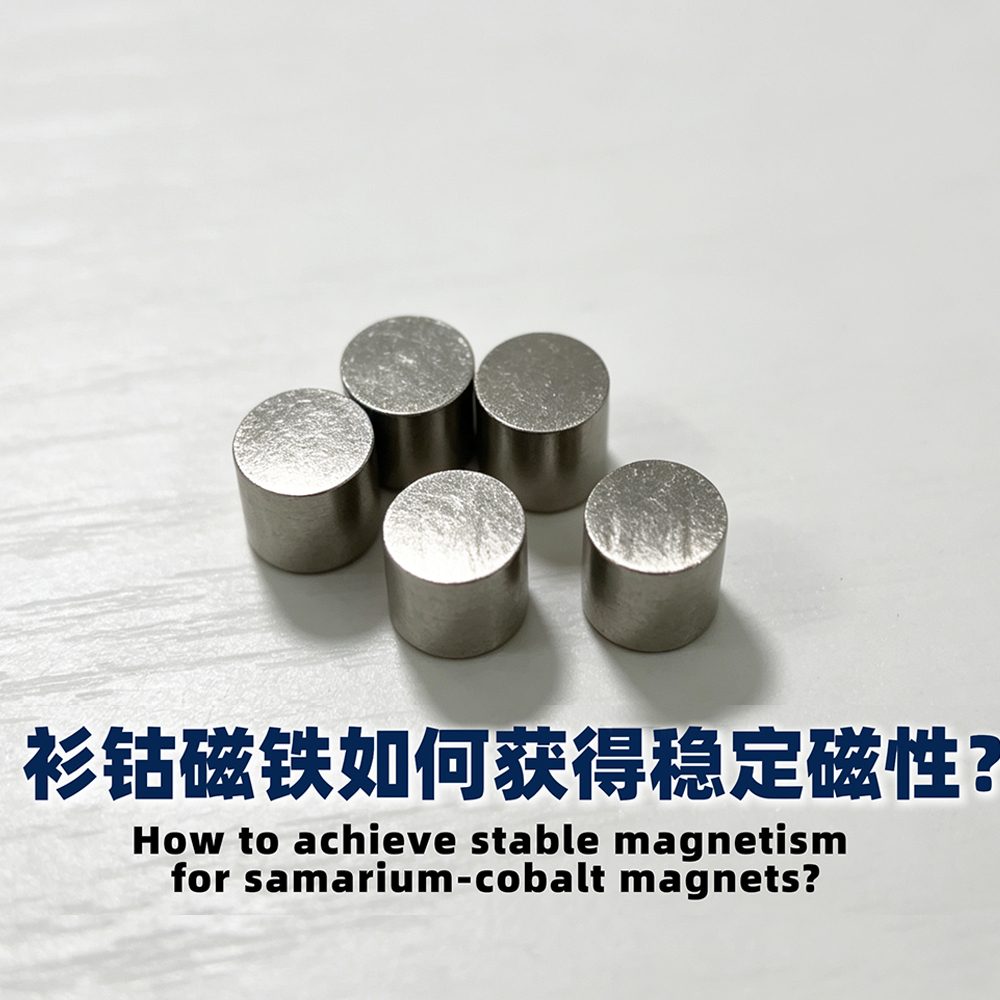
Video Demonstrating How Jiuju Cobalt Magnets Achieve Stable Magnetization—Jiuju Magnetizer
September 9, 2026
Thanks to their high coercivity and high-temperature resistance, samarium-cobalt magnets are widely used in high-temperature precision applications, where stable and uniform magnetic output is key to ensuring their core performance.

Video on Automatic Magnet Magnetization—Jiuju Magnetizer
August 17, 2026
Magnetization itself is a physical process that takes place in milliseconds; what truly slows down the overall production cycle are the manual loading, unloading, and alignment and calibration steps. In manual magnetization mode, workers must pick up and place each part individually and verify the polarity direction, which takes several seconds per part. Production capacity fluctuates significantly depending on the workers’ skill level and fatigue, and the strong magnetic field environment also poses safety hazards.

Video Demonstrating the Magnetization of Jiuju High-Frequency Drivers—Jiuju Magnetizer
September 14, 2026
Problems such as unusual noises during motor operation, reduced power output, and increased energy consumption often stem not from damaged windings or bearings, but from uneven magnetic field distribution.

Video Demonstrating Jiuju's Magnetization Process for Antique Speakers—Jiuju Magnetizer
September 13, 2026
To address the need for rework due to defective magnetic circuits in audio speakers, the restoration of demagnetized finished products, and the elimination of residual magnetism during the production process, Jiuju offers an integrated magnetization and demagnetization process solution that covers magnetic circuit components for speakers of all sizes, including both internal and external magnet types.
Video Case Study on the Magnetization Process for Jiuju Irregular-Shaped Cobalt Magnets—Jiuju Magnetizer
September 12, 2026
Irregularly shaped samarium-cobalt magnets have complex magnetic pole configurations. Combined with the high-temperature resistance and high coercive force of samarium-cobalt materials, this makes them highly prone to issues such as magnetic field non-uniformity and uneven magnetization during magnetization, placing high demands on tooling and process parameters.
Video Case Study on the Magnetization Process for Sintered Neodymium-Iron-Boron Magnetic Rings—Jiuju Magnetizer
September 11, 2026
Sintered neodymium-iron-boron magnetic rings are widely used in precision equipment such as motors and sensors; multipole magnetization imposes stringent requirements on magnetic field uniformity and the positioning accuracy of the magnetic poles.
Video Demonstrating the Magnetization of Jiuju High-Frequency Drivers—Jiuju Magnetizer
September 14, 2026
Problems such as unusual noises during motor operation, reduced power output, and increased energy consumption often stem not from damaged windings or bearings, but from uneven magnetic field distribution.
Video Demonstrating Jiuju's Magnetization Process for Antique Speakers—Jiuju Magnetizer
September 13, 2026
To address the need for rework due to defective magnetic circuits in audio speakers, the restoration of demagnetized finished products, and the elimination of residual magnetism during the production process, Jiuju offers an integrated magnetization and demagnetization process solution that covers magnetic circuit components for speakers of all sizes, including both internal and external magnet types.
Video Case Study on the Magnetization Process for Jiuju Irregular-Shaped Cobalt Magnets—Jiuju Magnetizer
September 12, 2026
Irregularly shaped samarium-cobalt magnets have complex magnetic pole configurations. Combined with the high-temperature resistance and high coercive force of samarium-cobalt materials, this makes them highly prone to issues such as magnetic field non-uniformity and uneven magnetization during magnetization, placing high demands on tooling and process parameters.
Video Case Study on the Magnetization Process for Sintered Neodymium-Iron-Boron Magnetic Rings—Jiuju Magnetizer
September 11, 2026
Sintered neodymium-iron-boron magnetic rings are widely used in precision equipment such as motors and sensors; multipole magnetization imposes stringent requirements on magnetic field uniformity and the positioning accuracy of the magnetic poles.
Video Demonstrating the Magnetization of Jiuju High-Frequency Drivers—Jiuju Magnetizer
September 14, 2026
Problems such as unusual noises during motor operation, reduced power output, and increased energy consumption often stem not from damaged windings or bearings, but from uneven magnetic field distribution.
Video Demonstrating Jiuju's Magnetization Process for Antique Speakers—Jiuju Magnetizer
September 13, 2026
To address the need for rework due to defective magnetic circuits in audio speakers, the restoration of demagnetized finished products, and the elimination of residual magnetism during the production process, Jiuju offers an integrated magnetization and demagnetization process solution that covers magnetic circuit components for speakers of all sizes, including both internal and external magnet types.
Video Case Study on the Magnetization Process for Jiuju Irregular-Shaped Cobalt Magnets—Jiuju Magnetizer
September 12, 2026
Irregularly shaped samarium-cobalt magnets have complex magnetic pole configurations. Combined with the high-temperature resistance and high coercive force of samarium-cobalt materials, this makes them highly prone to issues such as magnetic field non-uniformity and uneven magnetization during magnetization, placing high demands on tooling and process parameters.
Video Case Study on the Magnetization Process for Sintered Neodymium-Iron-Boron Magnetic Rings—Jiuju Magnetizer
September 11, 2026
Sintered neodymium-iron-boron magnetic rings are widely used in precision equipment such as motors and sensors; multipole magnetization imposes stringent requirements on magnetic field uniformity and the positioning accuracy of the magnetic poles.
Video Demonstrating the Magnetization of Jiuju High-Frequency Drivers—Jiuju Magnetizer
September 14, 2026
Problems such as unusual noises during motor operation, reduced power output, and increased energy consumption often stem not from damaged windings or bearings, but from uneven magnetic field distribution.
Video Demonstrating Jiuju's Magnetization Process for Antique Speakers—Jiuju Magnetizer
September 13, 2026
To address the need for rework due to defective magnetic circuits in audio speakers, the restoration of demagnetized finished products, and the elimination of residual magnetism during the production process, Jiuju offers an integrated magnetization and demagnetization process solution that covers magnetic circuit components for speakers of all sizes, including both internal and external magnet types.
Video Case Study on the Magnetization Process for Jiuju Irregular-Shaped Cobalt Magnets—Jiuju Magnetizer
September 12, 2026
Irregularly shaped samarium-cobalt magnets have complex magnetic pole configurations. Combined with the high-temperature resistance and high coercive force of samarium-cobalt materials, this makes them highly prone to issues such as magnetic field non-uniformity and uneven magnetization during magnetization, placing high demands on tooling and process parameters.
Video Case Study on the Magnetization Process for Sintered Neodymium-Iron-Boron Magnetic Rings—Jiuju Magnetizer
September 11, 2026
Sintered neodymium-iron-boron magnetic rings are widely used in precision equipment such as motors and sensors; multipole magnetization imposes stringent requirements on magnetic field uniformity and the positioning accuracy of the magnetic poles.
Video Demonstrating the Magnetization of Jiuju High-Frequency Drivers—Jiuju Magnetizer
September 14, 2026
Problems such as unusual noises during motor operation, reduced power output, and increased energy consumption often stem not from damaged windings or bearings, but from uneven magnetic field distribution.
Video Demonstrating Jiuju's Magnetization Process for Antique Speakers—Jiuju Magnetizer
September 13, 2026
To address the need for rework due to defective magnetic circuits in audio speakers, the restoration of demagnetized finished products, and the elimination of residual magnetism during the production process, Jiuju offers an integrated magnetization and demagnetization process solution that covers magnetic circuit components for speakers of all sizes, including both internal and external magnet types.
Video Case Study on the Magnetization Process for Jiuju Irregular-Shaped Cobalt Magnets—Jiuju Magnetizer
September 12, 2026
Irregularly shaped samarium-cobalt magnets have complex magnetic pole configurations. Combined with the high-temperature resistance and high coercive force of samarium-cobalt materials, this makes them highly prone to issues such as magnetic field non-uniformity and uneven magnetization during magnetization, placing high demands on tooling and process parameters.
Video Case Study on the Magnetization Process for Sintered Neodymium-Iron-Boron Magnetic Rings—Jiuju Magnetizer
September 11, 2026
Sintered neodymium-iron-boron magnetic rings are widely used in precision equipment such as motors and sensors; multipole magnetization imposes stringent requirements on magnetic field uniformity and the positioning accuracy of the magnetic poles.

 English
  Chinese
  Russian
  Vietnamese
  Korean
  Thai
Thai  French
  Spanish
  Japanese
  Hindi
Hindi  Bengali
  Portuguese