 Jiu Ju Magnetizer


The magnetic strength dropped significantly after just one week following magnetization? Troubleshooting and Prevention of Demagnetization
End-to-End Solution for Magnetization Automation
Automated Magnetic Charging Integrated Solution
Q1: A magnet that was just magnetized lost about 10–20 percent of its magnetic strength after being left for a week. Why did it demagnetize?
A: First, check the storage temperature. Neodymium-iron-boron magnets have a distinct inflection point on their demagnetization curve; for standard N-grade magnets, coercivity begins to decline significantly at temperatures above 80°C. If the magnets are stacked next to an oven or in a high-temperature area of the workshop during the summer, partial demagnetization may occur. Last month, a motor customer had fully magnetized magnet tiles stacked next to the discharge port of a drying oven. The ambient temperature was measured at over 60 degrees Celsius, and after three days, the magnetic flux had decreased by 12 percent. If temperature is not an issue, then the cause is demagnetizing fields—magnets that have been fully magnetized and stacked together generate opposing magnetic fields that partially demagnetize one another, a phenomenon that is particularly noticeable with small-sized, high-grade magnets.

Q2: How can you tell the difference between high-temperature demagnetization and demagnetization using a reverse magnetic field?
A: You can determine this by measuring the magnetic flux distribution across the magnet’s surface. The characteristic of high-temperature demagnetization is a uniform decrease in magnetic flux across the entire surface of the magnet, with each section showing similar results. The characteristic of demagnetization by a reverse magnetic field is that the local surface magnetic flux is significantly lower than in other areas; the edges and corners of the magnet demagnetize first because the demagnetization factor is greatest at the edges. If you have a B-H tester, the results are even more straightforward—for a magnet demagnetized by high temperature, the residual magnetization (Br) remains essentially unchanged, but the coercive force (Hcj) decreases; for a magnet demagnetized by an opposing magnetic field, both Br and Hcj decrease. If you don’t have the equipment, try a simple experiment: completely demagnetize the magnet you suspect is demagnetized, then remagnetize it. If it can be remagnetized, it was reverse demagnetization; if not, the microstructure has changed due to high temperatures.

Q3: How should magnetized magnets be stored to prevent demagnetization?
A: Three practical recommendations. Keep the storage temperature below 40°C and away from heat sources—this is a strict requirement. If the workshop does not have air conditioning in the summer, at least use a fan to blow air directly at the magnets to ensure proper ventilation. Fully magnetized magnets must be stored on dividers and not stacked together. Use plastic or aluminum dividers to place one magnet per compartment; the divider thickness should be at least twice the thickness of the magnet. This ensures that opposing magnetic fields are attenuated to a safe level. For high-grade thin-film magnets—such as those rated N52 or higher with a thickness of less than one millimeter—it is recommended to place them in a sealed stainless steel box after magnetization to provide magnetic shielding. This is cost-effective and highly effective.

Magnetization of Magnetic Materials
3C Electronic Magnetization
Motor Rotor Magnetization
Car Speaker Magnetization
New Energy Vehicle Industry
Medical Equipment Industry
Other Industries

Jiuju Magnetization 100 Q&A: What Counts as a Defective Magnet
Nov 10, 2026
Defects in permanent magnets go beyond appearance: magn…
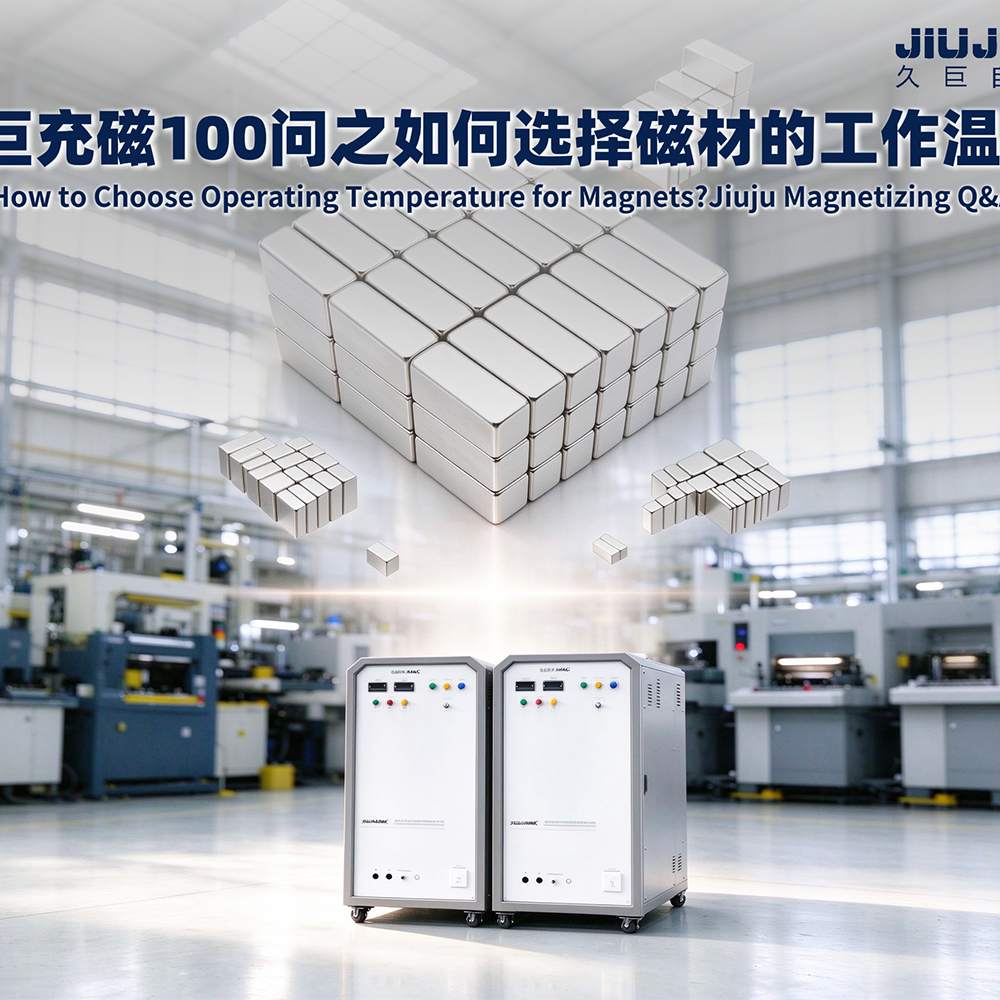
Magnetization 100 Q&A: Choosing the Magnet Operating Temperature
Nov 10, 2026
Operating temperature is the core constraint in magnet …

Precise Magnetization Control for AlNiCo Magnets: Case Video
Oct 30, 2026
AlNiCo magnets keep stable flux thanks to a very low te…

How NdFeB Magnets Achieve Stable Magnetism: Case Video
Oct 9, 2026
Stable NdFeB performance requires the right grade, a co…
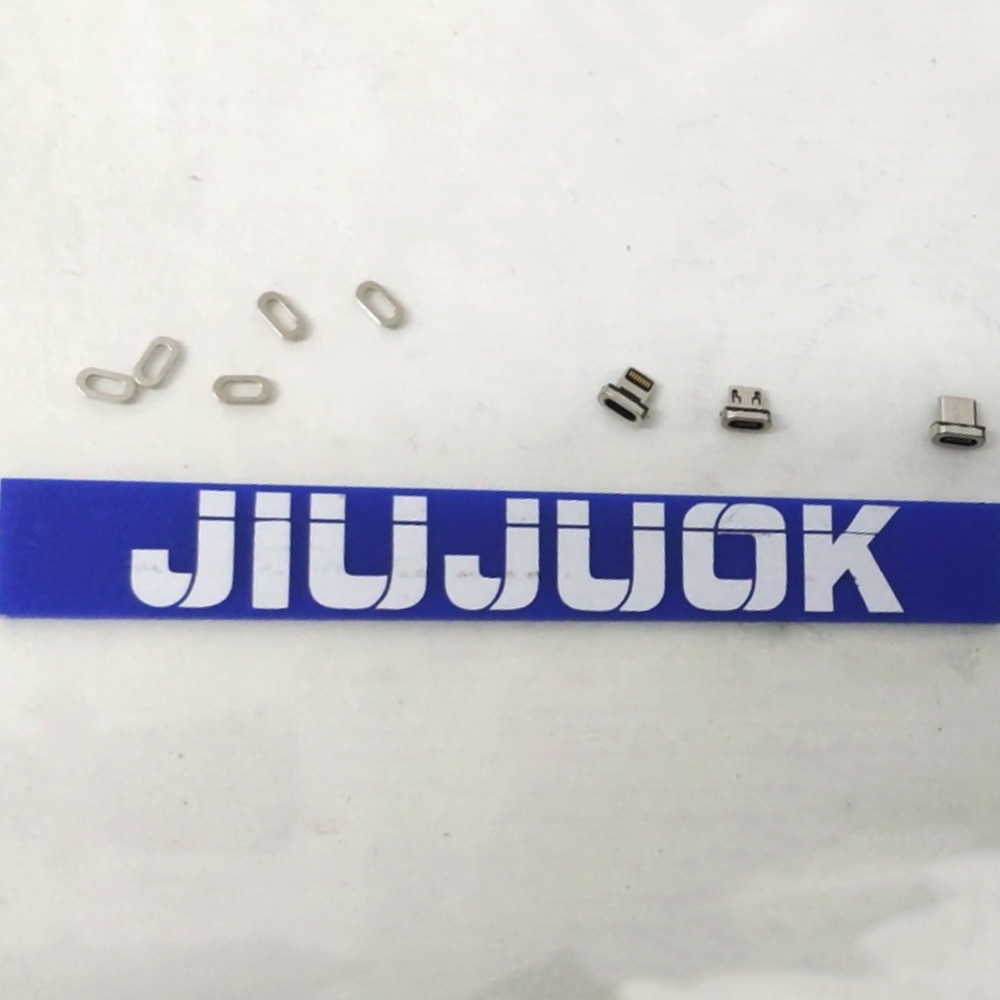
Magnetization for Magnetic Phone Chargers – Precisely Aligned with Core Magnetic Charging Processes
Nov 13, 2025
Magnetizing magnetic charging heads for phones: matchin…
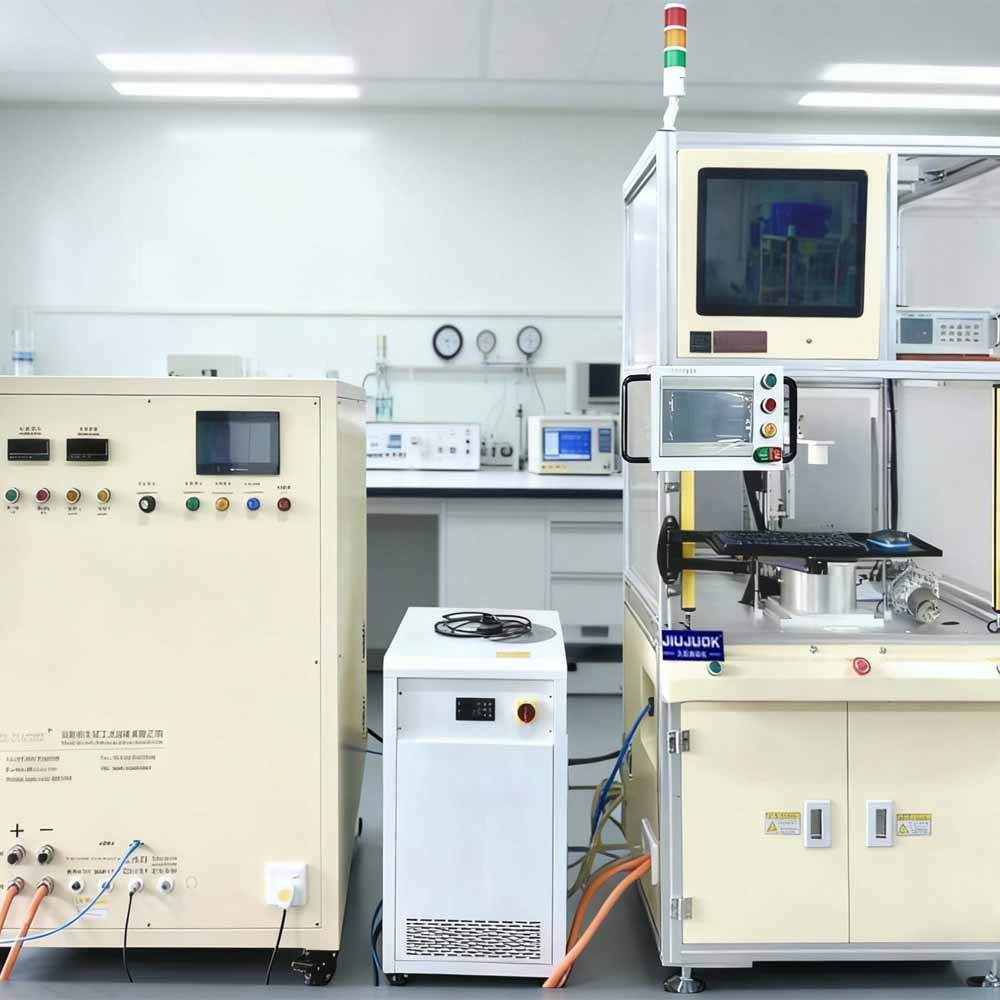
JIUJU Electronic Magnetizers: Solving Industry Pain Points and Achieving the Optimal Balance of Performance and Cost
Nov 11, 2025
The Jiuju electronic magnetizer balances performance an…
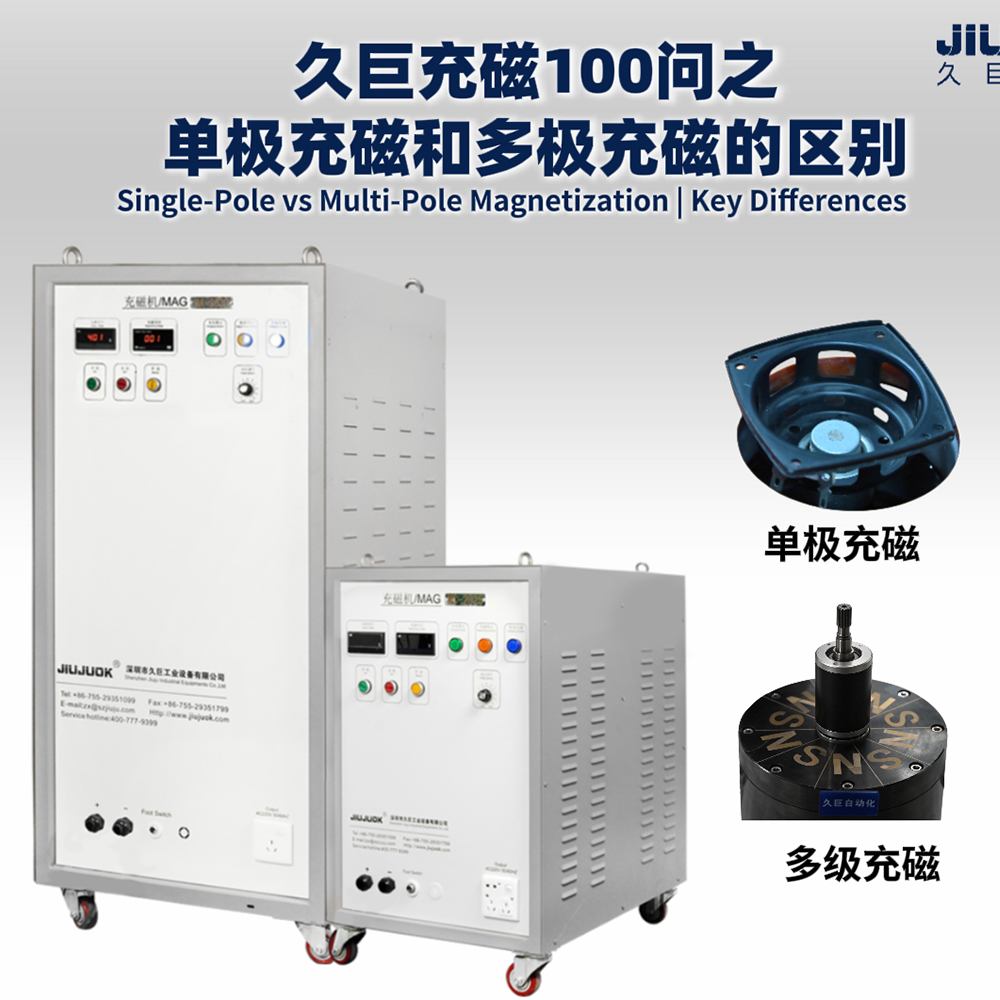
Magnetization 100 Q&A: Single-Pole vs Multi-Pole Magnetization
Nov 10, 2026
This video explains the difference between single-pole …

Video Demonstrating the Magnetization of Jiuju High-Frequency Drivers—Jiuju Magnetizer
Sep 14, 2026
Case video: Video Demonstrating the Magnetization of Ji…

Unusual Noises and Power Loss in Motors? The Root Cause Is an Uneven Magnetic Field—Jiuju Magnetizing Machine
Sep 6, 2026
Motor noise and torque loss often trace back to uneven …

Why Magnetic Field Measurement Is Essential for Mass Production Quality Control of Permanent Magnet Motors—Jiuju Magnetizing Machines
Sep 5, 2026
Why surface flux inspection is indispensable for volume…

How Critical Is Magnetization in Magnetic Switch Production?
Oct 29, 2026
In magnetic switches, magnetization controls holding fo…

Video Demonstrating Jiuju's Magnetization Process for Antique Speakers—Jiuju Magnetizer
Sep 13, 2026
Case video: Video Demonstrating Jiuju’s Magnetization P…
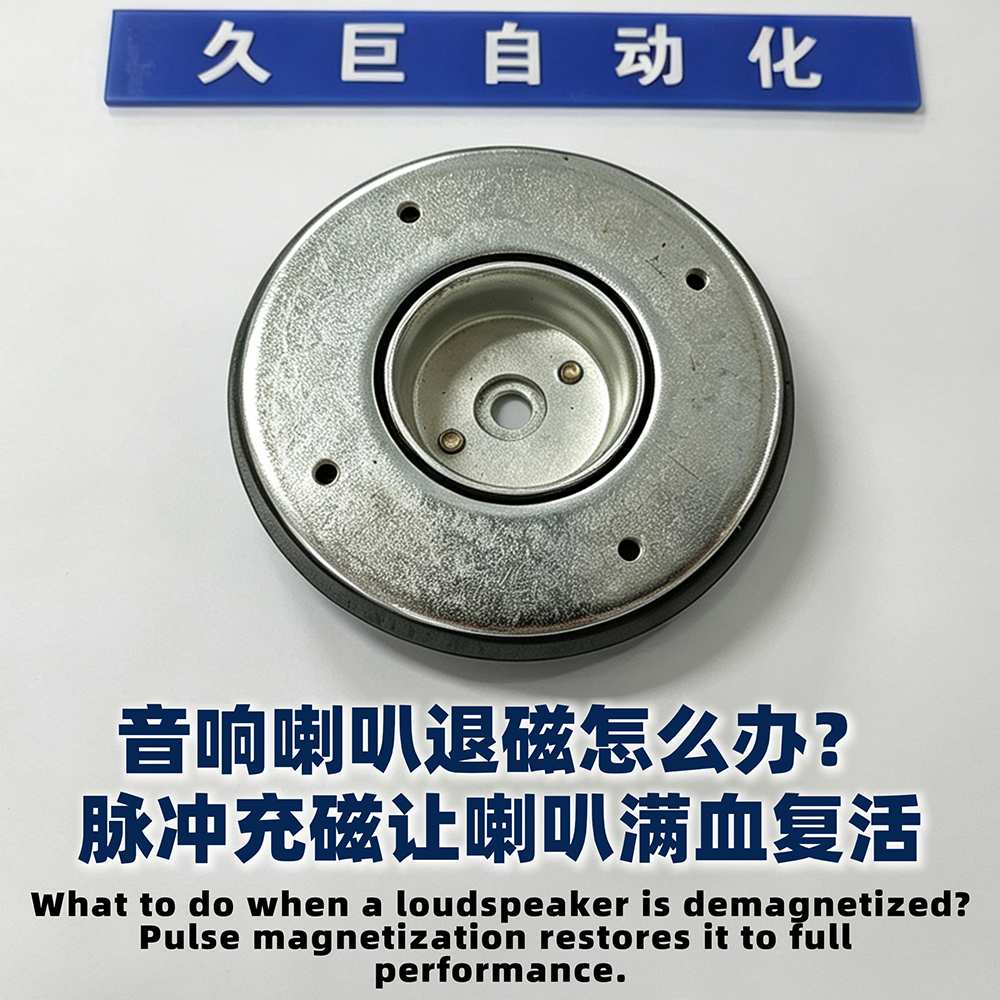
Video Demonstrating the Magnetization Process for Jiuju Speakers—Jiuju Magnetizer
Sep 10, 2026
Case video: Video Demonstrating the Magnetization Proce…

Why Does the Tip “Stick” to the Screw? A Video Explanation of Magnetization—Jiuju Magnetizing Machine
Aug 2, 2026
Case video: Why Does the Tip “Stick” to the Screw? A Vi…
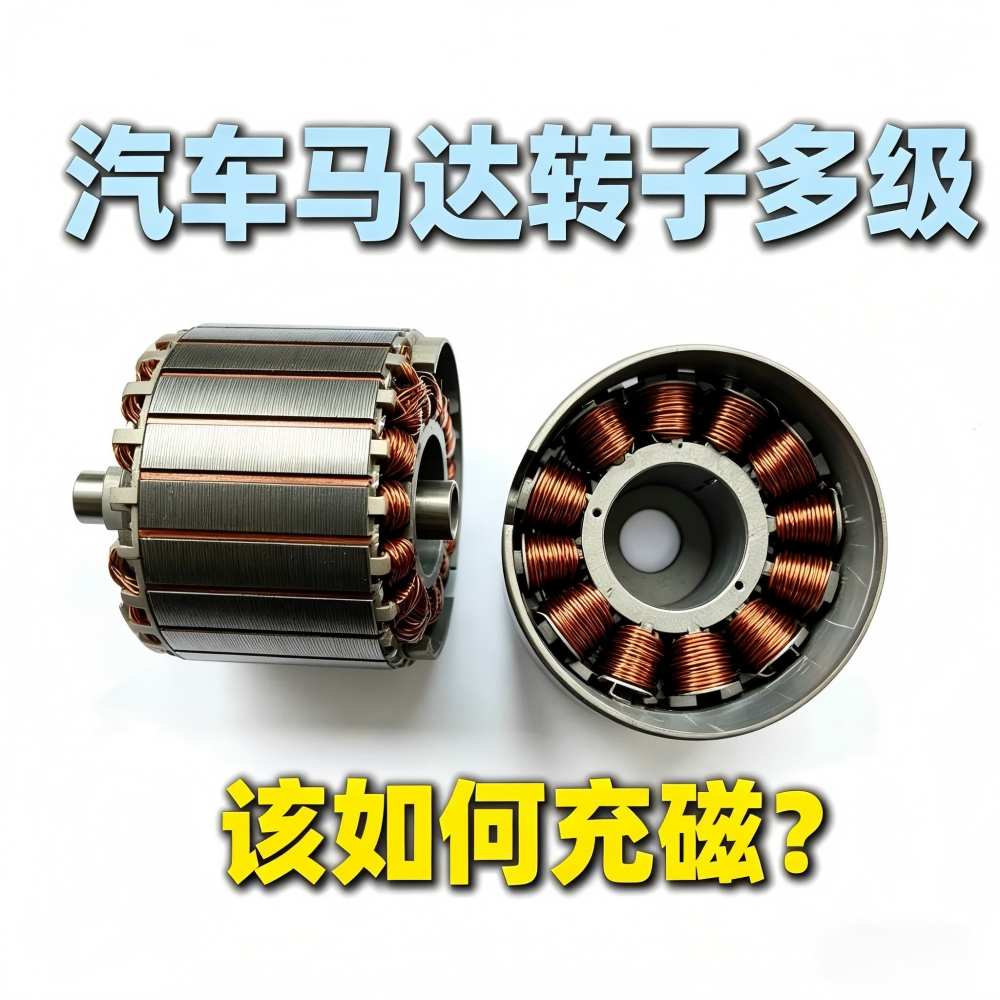
Video on Magnetizing Automotive Motor Rotors—Jiuju Magnetizing Machine
Jul 22, 2026
Case video: Video on Magnetizing Automotive Motor Rotor…

Video Case Study: Magnetizing Machine for Automotive Motor Rotors—Jiuju Magnetizing Machine
Jul 5, 2026
Case video: Video Case Study: Magnetizing Machine for A…

JIUJU Four-Station Motor Magnetizer – A Revolutionary Solution to Enhance New Energy Vehicle Motor Manufacturing Efficiency
Nov 10, 2025
The Jiuju four-station motor magnetizer improves effici…


Video Guide on How to Select a Magnetizing Machine—Jiuju Magnetizing Machines
Aug 8, 2026
Case video: Video Guide on How to Select a Magnetizing …

A 20-Second Video Guide on How to Choose a Magnetizing Machine—Jiuju Magnetizing Machine
Jul 21, 2026
Case video: A 20-Second Video Guide on How to Choose a …
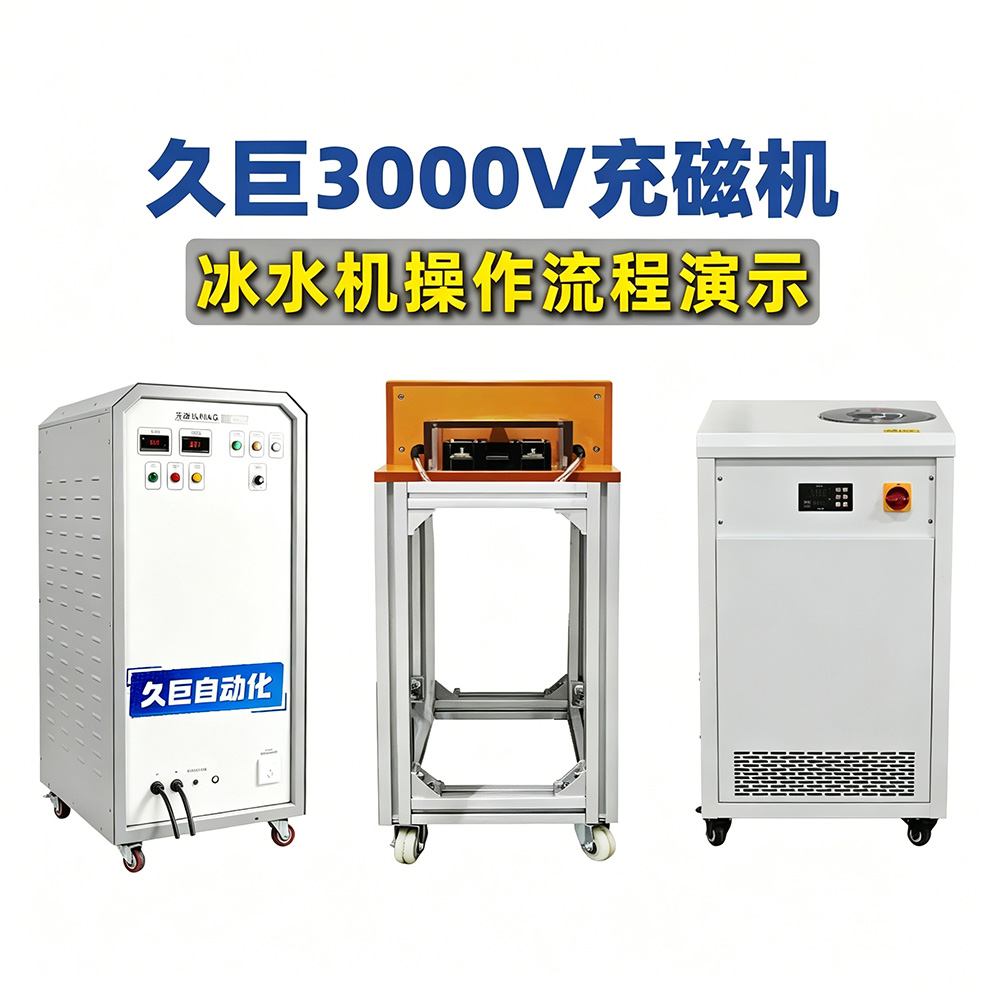
3000V Magnetizing Machine and Chiller Operation Demonstration Video—Jiuju Magnetizing Machine
Jul 3, 2026
Case video: 3000V Magnetizing Machine and Chiller Opera…
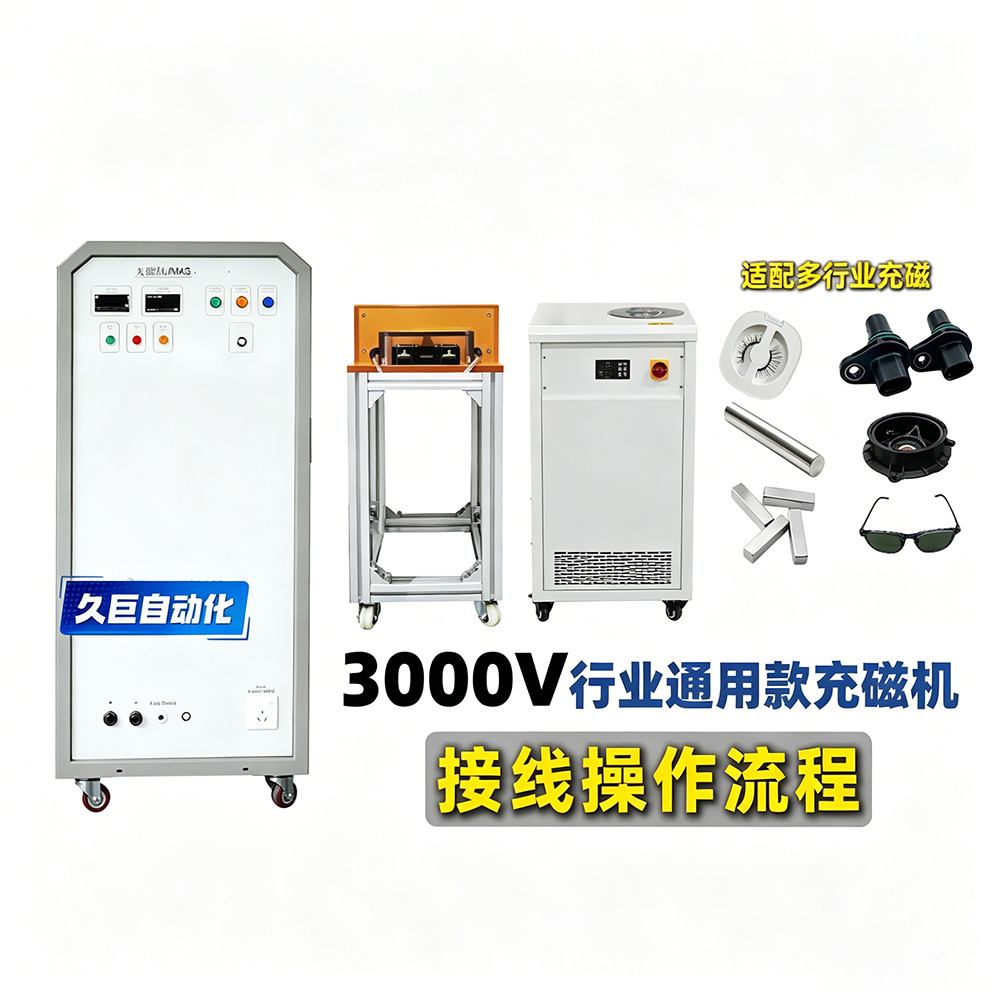
Video on the Wiring Procedure for a 3000V General-Purpose Industrial Magnetizer—Jiuju Magnetizer
Jul 2, 2026
Case video: Video on the Wiring Procedure for a 3000V G…
Previous. A Quick Guide: The Principles and Necessity of Motor Magnetization, and the Fundamentals of Permanent Magnet Motors—Jiuju MagnetizersNEXT STORY. Essential Insights on Magnetization: Understanding Magnetization and Orientation for Flawless Selection of Magnetization Equipment—Jiuju Magnetizers

 English
 Chinese
 Russian
 Vietnamese
 Korean
 Thai
 French
 Spanish
 Japanese
 Hindi
 Bengali
 Portuguese