 Jiu Ju Magnetizer


[JIUJU's Magnetic Industry News] Study on the Preparation Method of LaCoO₃ Perovskite Material and Its Catalytic Degradation Effect on Formaldehyde Wastewater
End-to-End Solution for Magnetization Automation
Automated Magnetic Charging Integrated Solution
Formaldehyde (HCHO) is a widespread water-soluble toxic pollutant, which mainly originates from industrial production emissions, volatilization of building and decoration materials, and the release of daily necessities. This compound is strongly carcinogenic and biotoxic, which will not only cause serious damage to the human respiratory system and immune system, but also destroy the ecological balance of the water body. Therefore, the development of efficient formaldehyde removal technology is of great significance for the protection of human health and the maintenance of ecosystem stability. The existing formaldehyde degradation methods mainly include adsorption technology, biodegradation method and catalytic oxidation method, among which catalytic oxidation method has become the key direction of the current research due to its advantages of complete degradation and no secondary pollution.
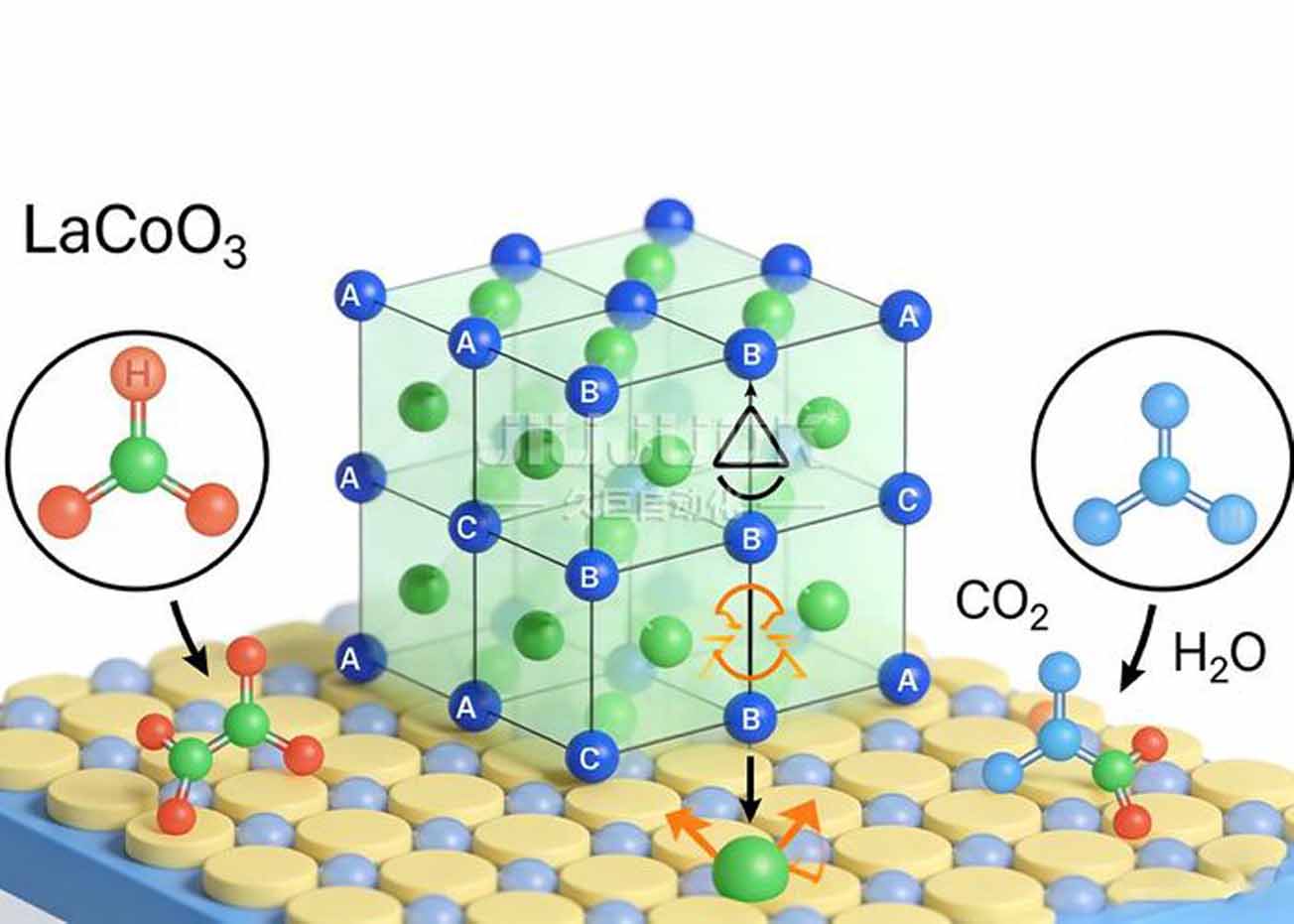
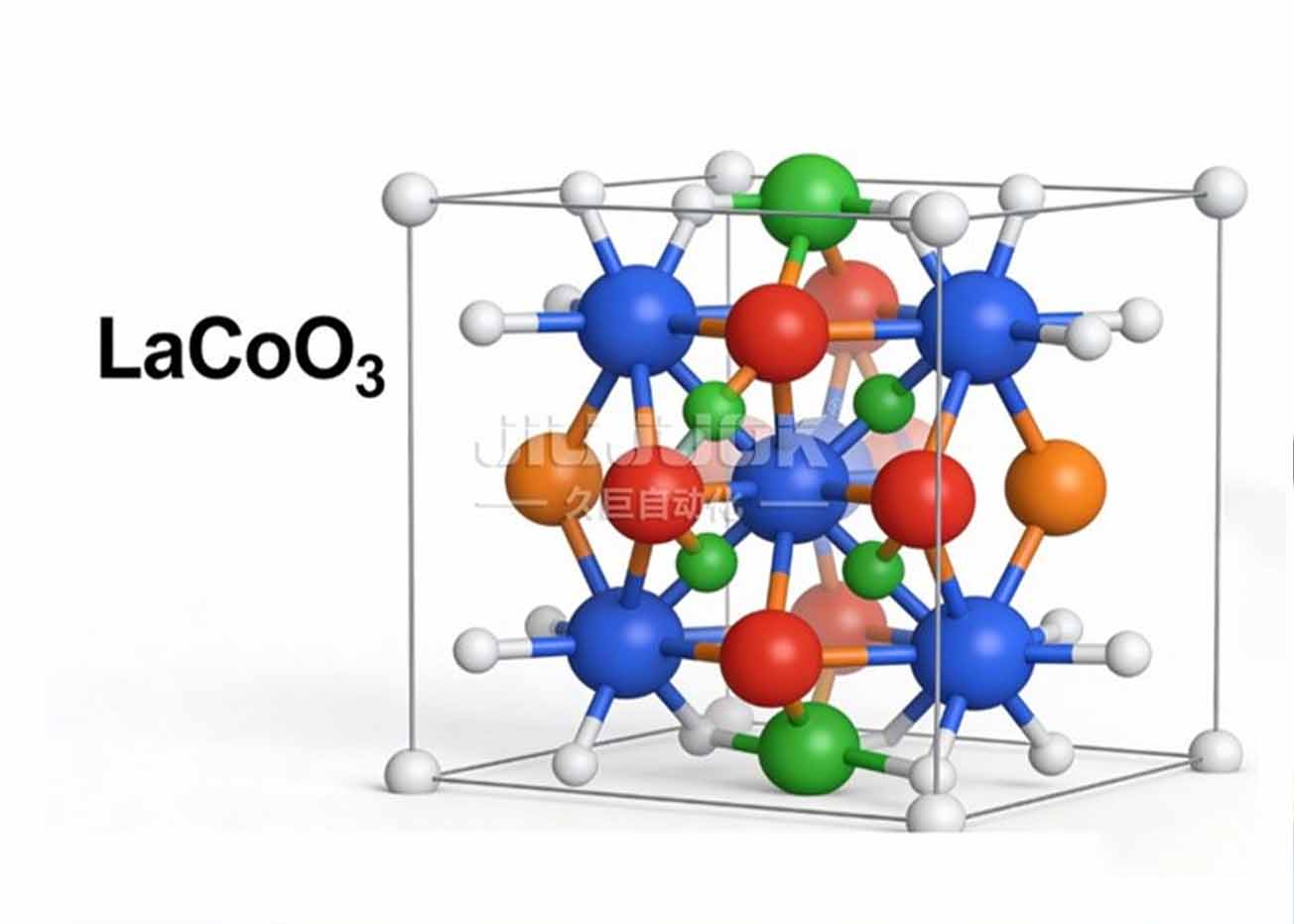
Calcite-type oxides (ABO₃), with unique crystal structures, excellent electronic conductivity and stable catalytic activity, have made remarkable progress in multiphase catalysis such as CO oxidation and volatile organic compound degradation. As a typical chalcogenide material, lanthanum cobalt oxide (LaCoO₃) has a potential oxidation catalytic ability due to the valence tunability of its active component cobalt (Co). However, there are relatively few studies on the degradation of formaldehyde in water by LaCoO₃, and the mechanism of its catalytic activity and reaction pathway are not yet fully understood.
Based on the above background, in this study, chalcogenide LaCoO₃ catalysts with different lanthanum to cobalt molar ratios were prepared by the sol-gel method, and the catalytic degradation of formaldehyde in water was systematically investigated at room temperature, and the catalytic mechanism was also revealed by the combination of the material characterization technique and the free radical burst experiments. The results of catalytic performance tests showed that the prepared LaCoO₃ catalysts exhibited excellent formaldehyde degradation activity. Compared with the traditional non-homogeneous catalysts (e.g., transition metal oxides, noble metal-loaded catalysts, etc.), the formaldehyde degradation time was shortened from 119 min to 10 min, and the degradation efficiency was improved by 12 times. The best degradation activity was achieved when the lanthanum to cobalt molar ratio was 1:1, and the complete removal of formaldehyde from water could be realized in 10 min at room temperature, and the degradation rate remained above 95% after 3 times of reuse, which showed good stability.
In order to elucidate the intrinsic reasons for the differences in catalytic activity, the surface electronic states of the catalysts with different lanthanum-cobalt molar ratios were analyzed in this study using X-ray photoelectron spectroscopy (XPS). The results showed that the relative content of Co²⁺ on the catalyst surface gradually decreased with the increase of lanthanum-cobalt molar ratio, while the content of Co³⁺ increased accordingly. Combined with the catalytic performance data, it can be found that the formaldehyde degradation activity of the catalyst is positively correlated with the Co²⁺ content, indicating that Co²⁺ is the key active site to promote the oxidative degradation of formaldehyde, and participates in the redox reaction through the Co²⁺/Co³⁺ valence cycle. reaction, accelerating the generation of active species.
In order to identify the main active species during the reaction process, this study further conducted free radical bursting experiments by adding sulfate radical (SO₄・-) bursting agent (anhydrous ethanol) and hydroxyl radical (・OH) bursting agent (tert-butanol) to the reaction system, respectively. The experimental results showed that the addition of both bursting agents significantly inhibited the degradation efficiency of formaldehyde, in which the degradation rate decreased by 681 TP3T with the addition of anhydrous ethanol and 521 TP3T with the addition of tert-butanol, which confirms that SO₄・- and ・OH are the main active species in the degradation of formaldehyde. Based on the above results, the present study proposed that the reaction mechanism of LaCoO₃-catalyzed formaldehyde degradation is a non-homogeneous Fenton-like oxidation reaction: Co²⁺ on the catalyst surface reacts with oxidants in the system (e.g., dissolved oxygen, hydrogen peroxide, etc.) to form SO₄・- and・OH, which then oxidizes formaldehyde into CO₄ and・OH through strong oxidative action. Formaldehyde is oxidized and decomposed into CO₂ and H₂O.
In this study, the potential application of chalcogenide LaCoO₃ in formaldehyde degradation in water was confirmed for the first time, the mechanism of lanthanide-cobalt molar ratio on the catalytic activity was clarified, and the reaction pathway of non-homogeneous Fenton-like oxidation was revealed, which provided the theoretical basis and technical reference for the development of highly efficient and stable catalysts for formaldehyde degradation at room temperature.
Magnetization of Magnetic Materials
3C Electronic Magnetization
Motor Rotor Magnetization
Car Speaker Magnetization
New Energy Vehicle Industry
Medical Equipment Industry

Jiuju Magnetization 100 Q&A: What Counts as a Defective Magnet
Nov 10, 2026
Defects in permanent magnets go beyond appearance: magn…
Magnetization 100 Q&A: Choosing the Magnet Operating Temperature
Nov 10, 2026
Operating temperature is the core constraint in magnet …

Precise Magnetization Control for AlNiCo Magnets: Case Video
Oct 30, 2026
AlNiCo magnets keep stable flux thanks to a very low te…

How NdFeB Magnets Achieve Stable Magnetism: Case Video
Oct 9, 2026
Stable NdFeB performance requires the right grade, a co…

轴向磁通电机多极充磁难点在哪?久巨工艺解答
Nov 19, 2026
轴向磁通电机磁钢铺在盘面、磁场垂直盘面、极数又多,难点集中在磁路方向、极间对位与热变形。说明专用轴向极头、角度定位销与多点扫描验收的做法。
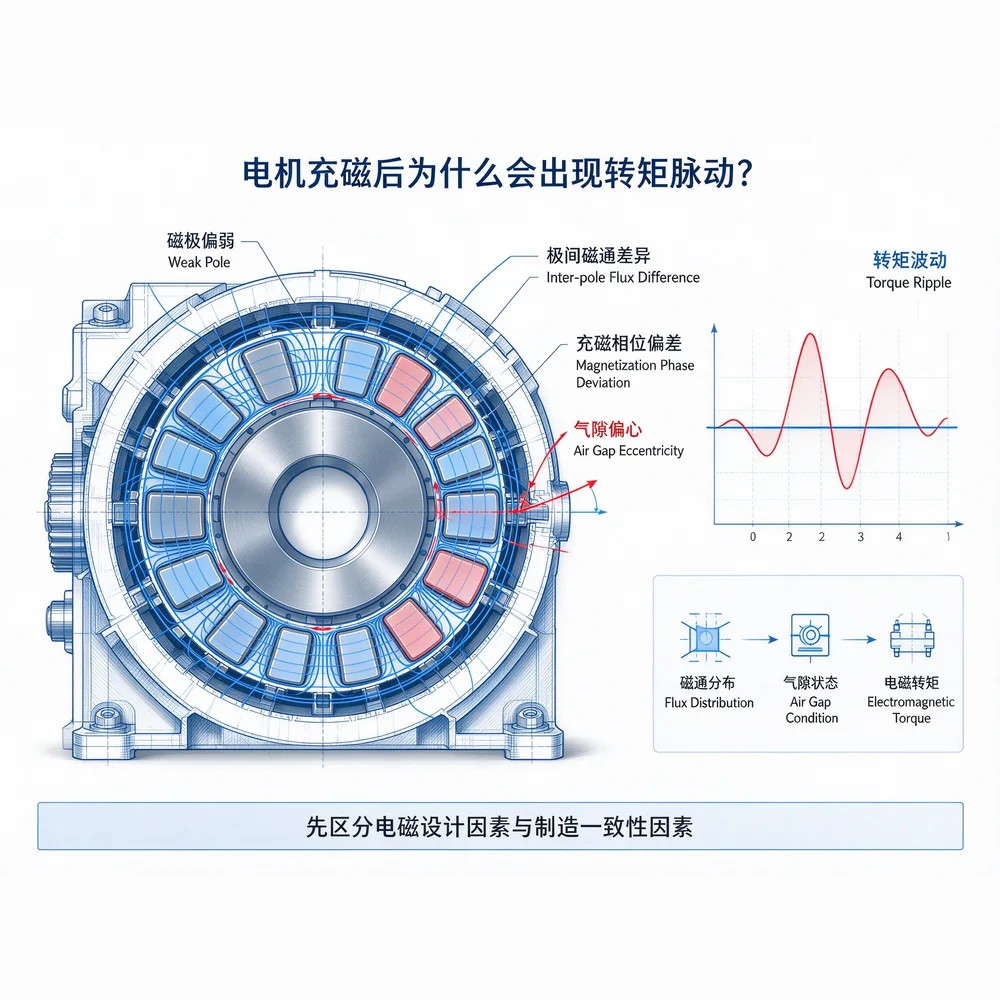
电机充磁后转矩脉动大如何解决?久巨工艺解析
Nov 19, 2026
转矩脉动大要先分清是电磁设计的齿槽转矩还是制造一致性的极间不均。用反电动势与逐极表磁定位,再从极头对位、能量闭环、磁通分组与斜极设计协同改善。
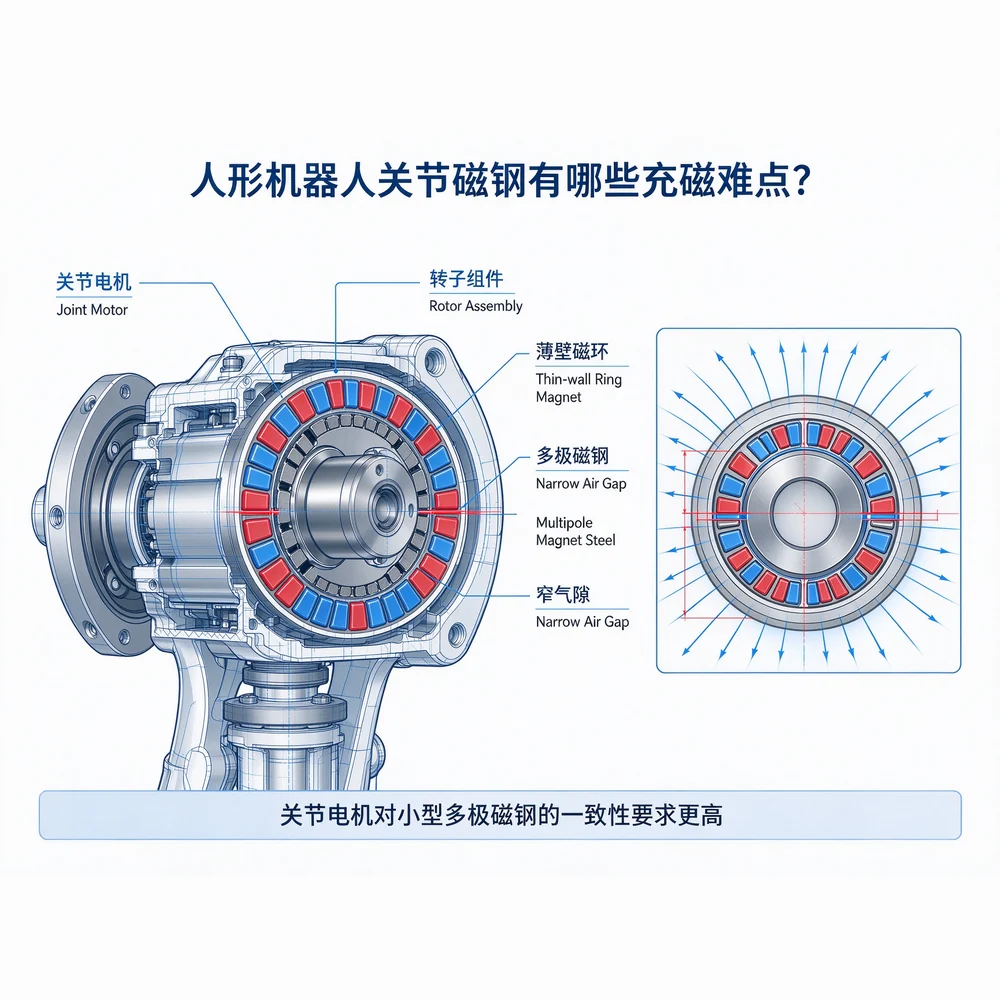
久巨人形机器人关节磁钢怎么保证充磁一致性?
Nov 19, 2026
关节磁钢小、薄、极数多,难点不在能不能充上,而在每一件每一极都一样。分三层管控一致性,用仿形胎具解决薄壁定位,能量闭环全检后按磁通分组配对。
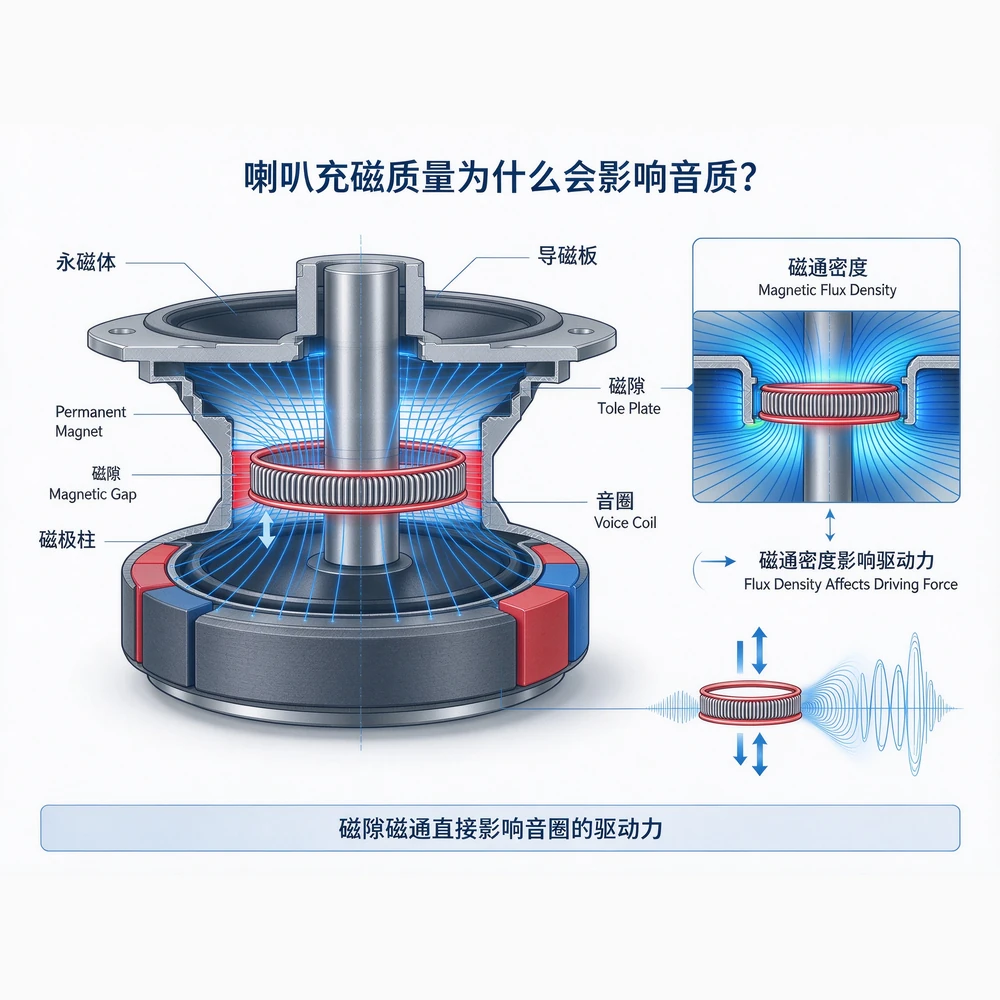
扬声器喇叭充磁后音质差异大怎么办?久巨电声行业答疑
Nov 19, 2026
同一批喇叭充完磁听感不一致,问题常在磁隙磁通而非装配。说明磁通偏低与不均如何影响灵敏度、失真与谐波,以及充磁端四个来源、稳定化处理与分档配对。
轴向磁通电机多极充磁难点在哪?久巨工艺解答
Nov 19, 2026
轴向磁通电机磁钢铺在盘面、磁场垂直盘面、极数又多,难点集中在磁路方向、极间对位与热变形。说明专用轴向极头、角度定位销与多点扫描验收的做法。
电机充磁后转矩脉动大如何解决?久巨工艺解析
Nov 19, 2026
转矩脉动大要先分清是电磁设计的齿槽转矩还是制造一致性的极间不均。用反电动势与逐极表磁定位,再从极头对位、能量闭环、磁通分组与斜极设计协同改善。
久巨人形机器人关节磁钢怎么保证充磁一致性?
Nov 19, 2026
关节磁钢小、薄、极数多,难点不在能不能充上,而在每一件每一极都一样。分三层管控一致性,用仿形胎具解决薄壁定位,能量闭环全检后按磁通分组配对。
扬声器喇叭充磁后音质差异大怎么办?久巨电声行业答疑
Nov 19, 2026
同一批喇叭充完磁听感不一致,问题常在磁隙磁通而非装配。说明磁通偏低与不均如何影响灵敏度、失真与谐波,以及充磁端四个来源、稳定化处理与分档配对。

 English
 Chinese
 Russian
 Vietnamese
 Korean
 Thai
 French
 Spanish
 Japanese
 Hindi
 Bengali
 Portuguese